
Grandparenting ourselves, the NGO halo effect, and storytelling for systems change
A monthly digest of inspiring projects, useful resources and opportunities to create systemic change.

Hello everyone,
I write to you from a bright, sunny morning after weeks of the worst storms in living memory here in Portugal. The wild weather on my doorstep and in the wider geopolitical context have made for a heavy start to 2026.
So for the past month I’ve channelled my energy into launching my new support group for changemakers (see below). I’ve tried to focus less on the doom-laden headlines, and more on the good work happening behind the scenes: the people and initiatives tending the foundations of change, trying new things, and expanding our sense of what’s possible. For those of us looking for deep, systemic transformation, these are the forces that matter most.
That’s what I write about here. If you’re new subscriber, welcome. This newsletter gathers people, ideas, opportunities and resources that have given me perspective and encouragement over the past month. I write for those who are not only trying to change systems, but also working to become the leaders and humans that such change demands. I hope you find something here that lifts you up. I’d love to hear what resonates in the comments.
In community,
Gen
My incredible client James Lewis has made a vital documentary charting the lives and court cases of LGBTQ+ heroes, and the shocking colonial history of queer criminalisation. Out Laws is the result of three years of grit, belief and personal investment, made in the face of a funding landscape that rarely backs “risky” narrative change work. I’ve had a front-row seat to the determination it’s taken from both James and his husband Saul (founder of The Good Side, who created my beautiful coaching brand) to keep this film alive. Out Laws will have its global premiere at BFI Flare this March.
Ness Labs is a learning community for ambitious knowledge workers, helping them do their best work without sacrificing their sanity. They offer practical thinking tools and resources designed to help individuals and teams make the most of their minds. I loved this recent piece in their newsletter on simple somatic regulation practices to help you get unstuck.
Acumen is a global force of entrepreneurs, investors, philanthropists, and social innovators working together to build a world based on dignity. They were founded by Jacqueline Novogratz on the radical idea that business, when cultivated with moral imagination, can break the cycle of poverty. They invest in transformational companies, build sustainable markets, and prepare leaders with the tools they need to create a more just and inclusive future. Jacqueline is currently looking for a Chief of Staff - a senior strategic partner and trusted advisor, working at the heart of the organisation’s leadership and priorities. Apply here.
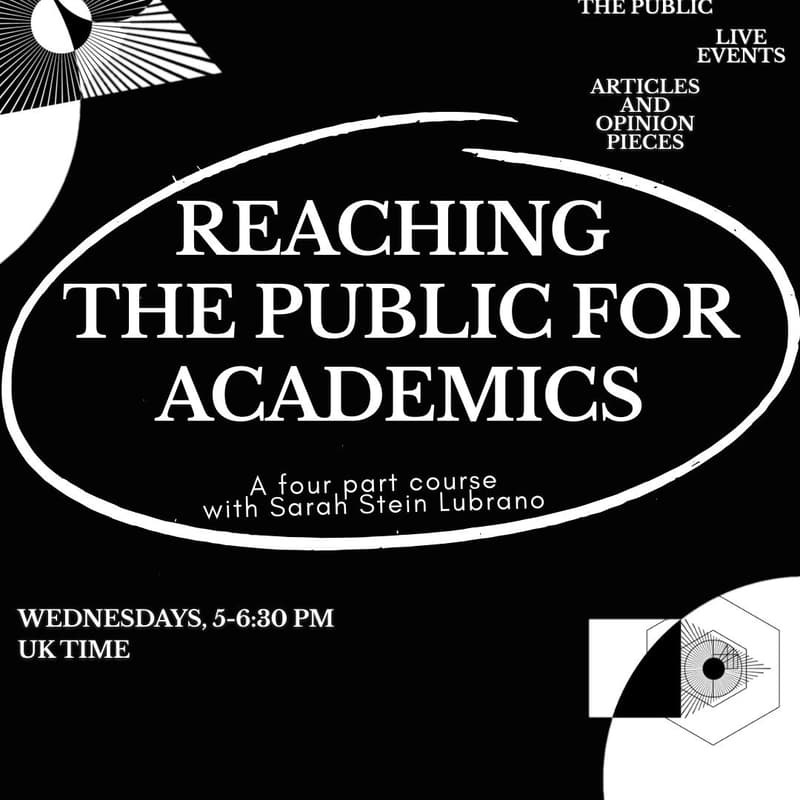
My brilliant friend Sarah Stein Lubrano is a researcher, writer, and learning/content designer interested in making important topics and good ideas seductive, memorable, and fun. She has a special passion for digital video and other digital content. Check out her upcoming four-part online series Reaching The Public for Academics, which is designed for scholars who want their work to travel beyond the university. Across sessions on writing for mainstream outlets, working with audio and video, convening live spaces, and publishing public-facing books, Sarah offers practical guidance on how to engage broader audiences without diluting intellectual depth.
The School for Moral Ambition has launched From the Field, a new newsletter sharing dispatches from fellows who are putting moral ambition into practice inside real institutions. Rather than polished success stories, it offers first-person reflections on the messy, high-stakes reality of trying to create impact from within - navigating trade-offs, constraints and uncertainty as they go. It’s a rare and refreshing look at what systems change actually looks and feels like on the ground.
Isabel de Bruin Cardoso, Nonprofit Ethics Lab, Oxford, Marco Meyer and Muel Kaptein have published a fascinating study in the Journal of Philanthropy on what they call the “NGO halo effect.” The research shows that when organisations overly glorify their mission, morals, and people, it can create ethical blind spots, and is positively correlated with unethical behaviour. As part of the study, they’ve developed a practical measurement tool to help NGOs assess their own halo risk. A timely reminder that moral purpose alone doesn’t protect institutions from harm, and that critical self-reflection is part of ethical leadership.
After losing his younger brother Sam to suicide at just 17, Ben West channelled his grief into action, launching a 300,000-signature petition to make mental health first aid compulsory in teacher training, advising government and business leaders, and writing ‘This Book Could Save Your Life’ to break the silence around the mental health emergency. His project Reasons to Stay, offers a simple but powerful intervention: anonymous letters written by volunteers and shared at random with anyone who visits the site. Each one is written by a real person, to a real stranger as a reminder that even in our darkest moments we are not alone.
The School of System Change works with networks, organisations and individuals to build the capacity to lead in complexity, cultivating both personal and collective agency through a rich, multi-method approach to systems change learning. They’ve just launched a new library of case studies: Stories of Systems Change in Practice. These five in-depth stories spanning health, climate and energy bring to life the relational, messy and non-linear nature of real transformation. The focus is not on heroes or tidy wins, but on the relationships, experiments and evolving strategies that make change possible.
New Philanthropy Capital is a think tank and consultancy that has spent over two decades at the heart of the UK’s impact landscape, helping funders, charities, policymakers and purpose-led businesses maximise their social and environmental impact. As an independent charity, they work across philanthropy, social enterprise, investment and civil society to strengthen what they call the “impact economy.” Their new report, Impact UK, tells the story and quantifies the scale of that economy in 2026. NPC estimates it to be worth £428bn, representing 15% of UK GDP, bringing together charities, philanthropists, social enterprises, impact investors and purpose-led businesses as part of one connected system. More than just a sizing exercise, the report reframes the impact economy as a coherent, growing force, a cross-sector community united by the desire to create public benefit over private gain.

Gisèle Pelicot is one of the bravest changemakers of our time. In 2024, during the mass rape trial of her husband Dominique Pelicot and 50 other men, she chose to waive her right to anonymity, insisting: “Shame must change sides.” For nearly a decade, her husband had secretly drugged and raped her, inviting dozens of men to abuse her while she was unconscious. By refusing a closed trial, she forced the world to confront not only her case, but the wider culture that enables sexual violence. All 51 men were convicted. In her recent Newsnight interview with Victoria Derbyshire, Gisèle speaks with extraordinary steadiness about the trial, her family, the public response, and what comes next. Her new memoir, A Hymn to Life, is a powerful testament to resilience and defiance, tracing her life before and after the crimes, and offering a message that has resonated globally: victims have nothing to be ashamed of.
Storytelling for Systems Change is a generous and beautifully curated story kit for changemakers, created by Dusseldorp Forum, a family foundation committed to a just and equitable Australian society, and the Centre for Public Impact ANZ, who work as learning partners to help governments and institutions think systemically and engage with complexity. The site is for storytellers, story-holders, story-listeners and the story-curious. It brings together years of research, reports, tools and reflections on how stories shape systems, and how listening is just as important as telling. From deep explorations of how government and funders receive (or fail to receive) stories from communities, to practical resources for building story practice and communities of learning, it’s an invitation to engage narrative not as decoration, but as infrastructure for change.
The Possibilists is a growing alliance of youth social innovation networks working to improve the conditions for young changemakers across Europe. They believe the system too often works against the very people trying to build a more inclusive, sustainable future, and are collaborating at an ecosystem level to change that. Their new Future Economy Study explores how young changemakers across Europe are envisioning and contributing to a greener, more digital and more just economic model at a time of turbulence and polarisation. The report is designed as a catalyst, grounding collective action in lived insight and data, and convening ecosystem leaders around a shared agenda. Join the launch on 25 February here.
Chance Marshall is a creative psychotherapist, writer and facilitator on a mission to make therapy feel more everyday and human. Through Tea & Crumpets, he offers gentle, thoughtful reflections that invite readers to pause, feel deeply and develop tools for living well in a complicated world. His latest piece suggests we move beyond “reparenting” ourselves to grandparenting ourselves instead. What began as a simple post became a crowdsourced collection of nostalgic memories - hot water bottles, flannelette sheets, and marmite sandwiches in the bath - an archive of what unconditional love once looked like in small, ordinary acts. Perhaps the best inspiration for self care I’ve ever come across!
ICYMI, I’ve recently launched System Changers Circle, my new online support group for people leading systemic change. The first cohort kicked off last week and the conversations are already reshaping how these leaders see themselves and their work. If you’re a changemaker looking for a space like this, the waitlist for the next cohort starting in April is now open. Register your interest here.
Thanks for reading! Let’s spread some optimism and inspiration. If you found this digest helpful, please hit the 🤍 below and forward it to a colleague or friend.
New here, and I want to say love it